



In This Article, You Will Learn
- Whether Arizona offers bar reciprocity for out-of-state attorneys
- The difference between admission on motion and UBE score transfer
- Basic Arizona bar admission requirements, including MPRE and character and fitness review
- How to request a UBE score transfer to Arizona
- Common costs, timelines, and mistakes to avoid when applying
- What attorneys relocating to Arizona should know before making the move
As an attorney, moving to a new jurisdiction can feel overwhelming. Whether you are an experienced licensed attorney relocating to Arizona or a recent law school graduate in another state, understanding Arizona’s bar admission process can help make your career transition smoother.
Arizona participates in the Uniform Bar Examination and offers pathways for some out-of-state attorneys to seek admission without taking the full Arizona bar exam. Depending on your background, you may qualify through admission on motion or by transferring a qualifying UBE score. Arizona also offers a limited practice-pending pathway for certain experienced attorneys while their admission applications are under review.
This guide explains Arizona bar reciprocity, admission on motion, UBE score transfers, common application requirements, and practical considerations for attorneys relocating to Arizona.
Does Arizona Have Bar Reciprocity?
Yes. Arizona offers pathways for many out-of-state attorneys to become licensed without taking the traditional Arizona bar exam in certain situations.
The two primary pathways are:
- Admission on Motion for eligible attorneys with qualifying legal experience
- UBE Score Transfer for applicants with a qualifying Uniform Bar Examination score
Applicants must still meet Arizona’s current admission requirements. These may include character and fitness review, MPRE requirements, completion of the Arizona law course, proof of good standing, and other documentation required by Arizona’s admissions authorities.
How Can Out-of-State Attorneys Practice Law in Arizona?
To practice law in Arizona, an applicant generally must meet eligibility requirements related to education, character and fitness, professional responsibility, and admission status. The most common method is admission by examination, which involves taking and passing the bar exam.
For attorneys who are already licensed elsewhere, Arizona bar reciprocity may offer another path. This can allow eligible attorneys to seek admission without retaking the full Arizona bar exam, as long as they meet Arizona’s requirements.
Arizona bar reciprocity options may include:
Admission on Motion
This pathway may be available to eligible attorneys who are licensed, in good standing, and have been primarily engaged in the active practice of law for three of the five years immediately before applying.
Admission by Transferred UBE Score
This pathway may be available to applicants who earned a qualifying Uniform Bar Examination score in another recognized UBE jurisdiction and meet Arizona’s other admission requirements.
Arizona’s official admissions materials identify admission by examination, admission on motion, and admission by transferred UBE score as recognized methods of admission.
Already licensed elsewhere and considering a move?
Read: Practicing Family Law in Arizona: Why Lawyers Are Moving to AZ
Arizona Bar Reciprocity: Admission on Motion vs. UBE Score Transfer
Arizona offers bar reciprocity through admission on motion and admission by transferred UBE score. The right option depends on your current license status, legal experience, prior exam history, UBE score, and timing.
Both pathways still require applicants to complete Arizona’s admission process. That may include character and fitness review, proof of good standing, MPRE requirements, the Arizona law course, and supporting documentation.
Admission on Motion
Admission on motion is generally intended for attorneys who are already licensed and have qualifying legal practice experience.
For admission on motion in Arizona, an applicant generally must:
- Hold a J.D. from an ABA-approved law school
- Be admitted by bar examination in another jurisdiction that meets Arizona’s reciprocity requirements
- Have been primarily engaged in the active practice of law for three of the five years immediately before applying
- Satisfy Arizona’s MPRE requirements
- Be in good standing in every jurisdiction where admitted
- Not be subject to pending lawyer discipline
- Establish current character and fitness to practice law
- Complete Arizona’s course on Arizona law
Applicants should review the current admission-on-motion requirements and application checklist before filing.
UBE Score Transfer
UBE score transfer is generally intended for applicants who earned a qualifying score on the Uniform Bar Examination in another recognized UBE jurisdiction.
For legacy UBE results, Arizona currently requires:
- A score of at least 273 if earned before the July 2023 administration
- A score of at least 270 if earned during the July 2023 administration or a later legacy UBE administration
- A qualifying score earned within Arizona’s applicable transfer period
Arizona will begin accepting NextGen UBE score transfers with the July 2026 administration. The minimum score for NextGen UBE transfers from the July 2026 and February 2027 administrations is currently 620 until further order of the Arizona Supreme Court.
Applicants should confirm the current score, timing, filing, and eligibility requirements directly with the Arizona State Bar Admission Office before applying.
Cómo solicitar la reciprocidad de Arizona Bar
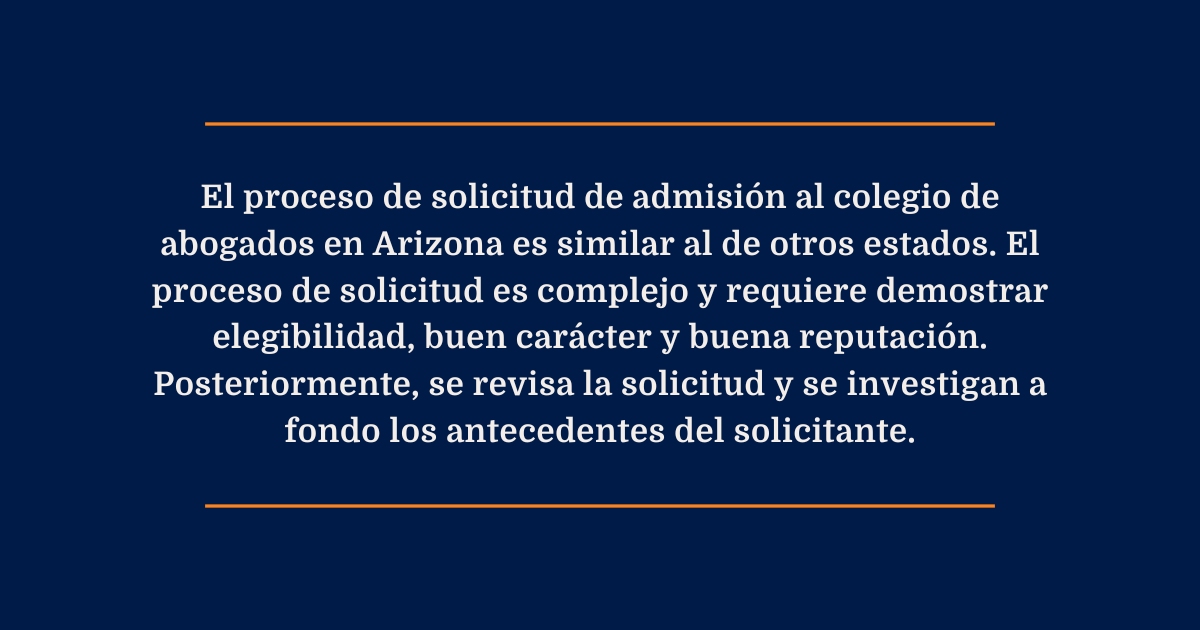
The Arizona bar admission process is similar to the process in many other jurisdictions. Applicants must provide evidence of eligibility, character, good standing, and required legal education or exam history. The application is then reviewed, and the applicant’s background may be investigated as part of the character and fitness process.
Before applying, gather the required documentation. In many cases, original, certified, or official documentation may be required.
Common application materials may include:
- Documentation of citizenship or lawful immigration status
- Historial de residencia
- Baja militar u otra documentación, si procede
- College, university, and law school attendance information
- Information about prior applications to practice law or another licensed profession
- Recent employment history
- Referencias jurídicas
- History of civil, criminal, and driving matters, including complaints and dispositions when applicable
- Historial financiero
- Tarjeta de huellas dactilares
- Fotografía oficial
- Official MPRE score report
- Evidence of a J.D. degree
- Evidence of a qualifying UBE score, if applying by UBE transfer
- Certificados de buena reputación
- Moral character and fitness information
Applicants can review current eligibility criteria, application forms, fees, filing instructions, and documentation requirements through Arizona Supreme Court Attorney Admissions. After an application is submitted, the Committee on Character and Fitness may request additional documentation or an interview.
How to Request a UBE Score Transfer
You can request your UBE score transfer through the National Conference of Bar Examiners.
To request a UBE score transfer, you generally need to:
- Log in to your NCBE account or create one
- Go to the Score Services section
- Submit a UBE score transcript request
- Enter the jurisdiction where you took the UBE
- Enter the date of the examination
- Select Arizona as the jurisdiction where your official transcript should be sent
Official score transcripts are sent directly to the receiving jurisdiction. NCBE currently charges a fee for score transcript services, but fees and procedures may change. Applicants should review the current NCBE Score Services information before submitting a request.
Arizona Bar Reciprocity Costs and Timeline
Planning to move to Arizona as an attorney means accounting for both time and cost. Fees and timelines can vary depending on the method of admission, whether the application is complete, the applicant’s background, character and fitness review, and current processing volume.
Applicants should check the current Arizona Bar Admissions application information and fee schedules before applying.
General planning considerations may include:
- Admission on motion: Processing time may vary based on the complexity of the application, the supporting documentation, and the character and fitness review.
- UBE score transfer: Processing may be more efficient when all required documents are complete and the applicant has a qualifying score.
- Arizona law course: Applicants should account for any Arizona-specific course or requirement that must be completed before admission.
- Additional costs: Applicants may need to budget for fingerprints, certified documents, score transfer fees, certificates of good standing, and other application-related expenses.
- Follow-up requests: Missing information or additional character and fitness review can extend the timeline.
Because fees, deadlines, and processing details can change, applicants should use the current information published by Arizona Supreme Court Attorney Admissions rather than relying on estimates from older articles.
Para abogados que se trasladan a AZ: Trampas y errores comunes que deben evitarse
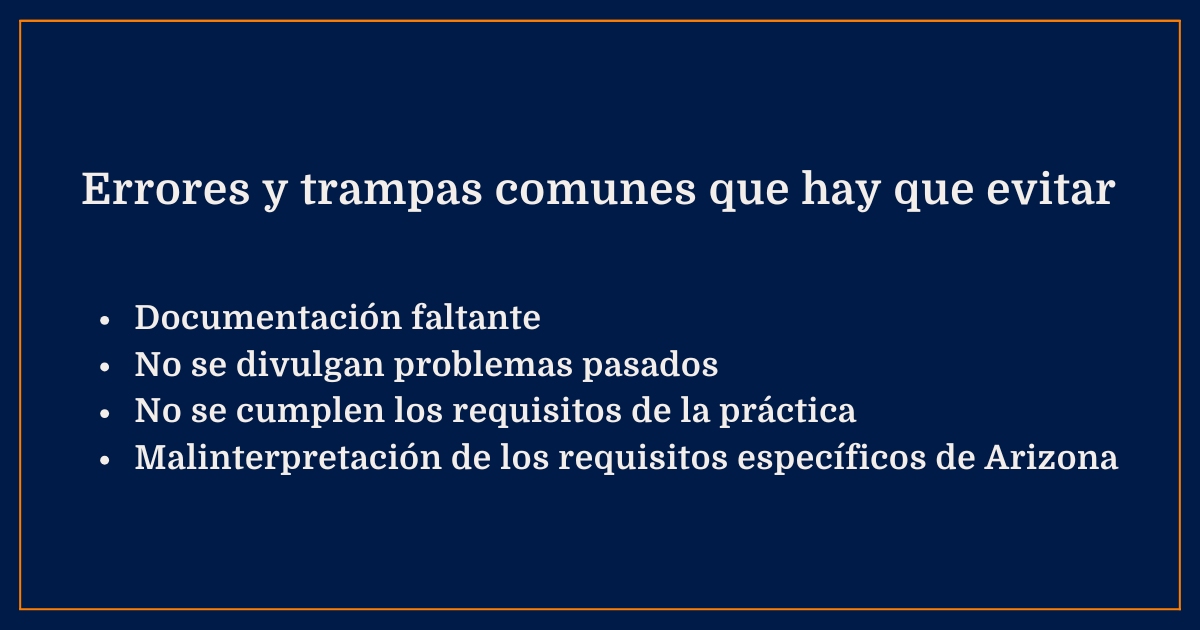
One of the most effective ways to make the Arizona admission process smoother is to pay careful attention to detail before submitting your application.
Common mistakes that may delay the process include:
Missing Documentation
Incomplete certificates of good standing, proof of practice, character and fitness materials, score reports, or other required documents can delay review.
Failing to Disclose Past Issues
Character and fitness review is thorough. Applicants should accurately disclose prior legal, professional, disciplinary, financial, and other required history.
Misunderstanding Practice Requirements
Attorneys applying by motion should confirm that their legal experience satisfies Arizona’s current active-practice requirements.
Assuming the Rules Are the Same Across States
Bar reciprocity, score-transfer rules, deadlines, and eligibility standards vary by jurisdiction. Eligibility in one state does not guarantee eligibility in Arizona.
Not Checking Current Requirements
Bar admission rules and UBE requirements can change, especially during the transition to the NextGen UBE. Applicants should verify all requirements before applying.
Reubicación de abogados: Arizona tiene una demanda creciente
Arizona continues to attract attorneys from across the country as the state’s population and legal needs grow.
For attorneys relocating to Arizona, this may create opportunities in practice areas such as family law, criminal defense, and personal injury.
Attorneys considering a move should understand Arizona’s admission requirements early, especially if they plan to pursue admission on motion, transfer a UBE score, or seek practice-pending authorization.
Attorney Insight
Relocating attorneys should treat Arizona bar admission as more than a paperwork task. Small issues involving documentation, disclosure, good standing, or timing can delay the process and affect when an attorney can begin practicing. Before applying, carefully review the current Arizona admission requirements and confirm which pathway fits your background, whether that is admission on motion, UBE score transfer, practice pending, or another available option.
Starting or rebuilding your legal career in Arizona involves more than admission requirements.
FAQs About Arizona Bar Reciprocity
¿Está pensando en ejercer la abogacía en Arizona?
If you’re an attorney navigating Arizona bar reciprocity or considering relocation to Arizona, The Valley Law Group would love to connect.
The Valley Law Group offers:
- A commitment to excellence in legal representation
- Support for lateral attorneys, including training, professional development, and career advancement opportunities
- Four locations across the Valley, including Phoenix, Gilbert, Scottsdale, and Peoria
- Open positions for qualified legal professionals

Explore current opportunities on our Careers page and learn more about joining an experienced Arizona law firm.
For more career-focused guidance, visit our Attorney Resources section for additional articles written for legal professionals and attorneys considering opportunities in Arizona.
* Editor’s Note: This article was originally published on June 6, 2025, and was updated on July 10, 2026, to reflect current Arizona bar admission guidance, improve readability, clarify admission on motion and UBE score transfer pathways, and add information about NextGen UBE updates.
Fuentes:
- Arizona Judicial Branch. (n.d.). Admission on motion. Arizona State Bar Admission Office. https://www.azbaradmissions.org/appinfo.action?id=201
- Arizona Judicial Branch. (n.d.). Applications and information. Arizona State Bar Admission Office. https://www.azbaradmissions.org/app-info
- Arizona Judicial Branch. (n.d.). Practice pending. Arizona State Bar Admission Office. https://www.azbaradmissions.org/appinfo.action?id=221
- Arizona Judicial Branch. (n.d.). UBE transfer. Arizona State Bar Admission Office. https://www.azbaradmissions.org/appinfo.action?id=205
- Arizona Judicial Branch. (2017). Rules for admission of applicants to the practice of law in Arizona. Arizona State Bar Admission Office. https://www.azbaradmissions.org/rulesofadmission_2017
- National Conference of Bar Examiners. (n.d.). Score services. https://www.ncbex.org/score-services/
- National Conference of Bar Examiners. (n.d.). Uniform Bar Examination. https://www.ncbex.org/exams/ube

Jonathan Roeder es socio fundador de The Valley Law Group y un abogado de Arizona especializado en derecho de familia, defensa penal y daños personales. Jonathan ha centrado su práctica en ayudar a los clientes a afrontar cuestiones legales complejas mediante una orientación clara, estrategias prácticas y una defensa firme. Como abogado, empresario y padre de tres hijos, comprende la importancia de la preparación, la comunicación y de ayudar a los clientes a tomar decisiones informadas en momentos de estrés e incertidumbre. La carrera de Jonathan refleja tanto el reconocimiento profesional como su compromiso con el desarrollo de otras personas en el ámbito jurídico. Ha obtenido numerosos galardones legales, entre los que se incluyen el reconocimiento como «Super Lawyers Rising Star» y una calificación de 10,0 («Excelente») en Avvo, al tiempo que ejerce de mentor de estudiantes de Derecho y jóvenes abogados a través de su labor como profesor universitario y líder en su sector.