



In This Article, You’ll Learn
- Who qualifies for expungement, record sealing, or a set aside in Arizona
- The differences between expungement, record sealing, and set-aside relief
- Which offenses may or may not qualify
- How the Arizona record-clearing process works
- Common mistakes that can delay or prevent approval
- When it makes sense to speak with a criminal defense attorney
While expungement is not available for every crime, many Arizona residents can have their criminal records cleared, allowing them to move forward in life with fewer obstacles. Understanding how expungement works and whether you qualify is crucial, as eligibility guidelines in Arizona can vary depending on the crimes on your record.
Learn more about expungement and see if you qualify.
What Does Expungement Mean in Arizona?
Expungement is a legal tool in Arizona that allows certain criminal records to be cleared, sealed, or marked as set aside. It’s crucial to understand that expungement does have limitations. While these tools prevent the public from viewing your record, the police and the courts can view your full record.
People often pursue expungement to reduce the long-term impact a criminal record can have on their lives. According to the National Conference of State Legislatures (NCSL, 2025), about one in three adults has a criminal record, which can make it difficult to pursue certain opportunities.
Expungement may make it easier to:
- Find employment
- Secure housing
- Obtain professional licenses
- Pass background checks
In Arizona, discussing expungement can be confusing because the state uses several methods to modify and seal criminal records. It’s important to understand the difference between having convictions set aside vs expungement in Arizona. Unlike some states that completely erase criminal records, Arizona primarily offers record sealing and set-aside records. Often, the term “expungement” refers to record sealing.
Who Qualifies for Expungement in Arizona?
Understanding who qualifies for expungement and Arizona record expungement requirements is one of the most important parts of the process. It is crucial to note that not all crimes qualify for expungement, and your ability to expunge your record is subject to court decision. Eligibility is highly limited.
Individuals in Arizona who may qualify to have their records set aside or cleared must:
- Have Specific Non-Violent or Qualifying Offenses – Many misdemeanor charges and certain felony offenses may be eligible for sealing or setting aside. For example, marijuana offenses may be expunged. DUI, burglary, and identity theft records are examples of crimes that can be sealed.
- Complete All Sentencing Requirements – To qualify, you must have successfully completed all sentencing requirements imposed by the court. This includes jail time, probation terms, fines, restitution, and counseling.
- Have No Pending Criminal Charges – You may qualify for sealing or a set-aside record if you don’t have any open criminal cases or unresolved criminal matters.
- Complete a Waiting Period – To qualify for record sealing, there is typically a waiting period that begins after you have completed your sentence. As outlined in the Arizona Revised Statutes (A.R.S. § 13-911), this period can range from two years for a class 2 or 3 misdemeanor to ten years for a class 2 or 3 felony.
Who Does Not Qualify for Expungement in Arizona?
Not everyone can have their record expunged, sealed, or set aside in Arizona. It is important to note that only marijuana offenses are eligible for expungement in Arizona. All other offenses may be sealed or set aside only.
You may not qualify for sealing or setting aside if you have:
- Violent or dangerous felony convictions
- Repeated serious offenses
- Unfinished probation, jail time, fines, or other penalties
- Pending criminal charges
- Recently been convicted
Attorney Insight from Jon McCarty, Managing Criminal Defense Attorney
One of the biggest misconceptions we see is that every criminal record can be “expunged.” Arizona offers several different forms of post-conviction relief, and the right option depends on your conviction, when it occurred, and whether you’ve completed all sentencing requirements. Having an attorney review your record before filing can help you avoid unnecessary delays or denials.
Set Aside Vs Expungement Arizona: Why It Matters
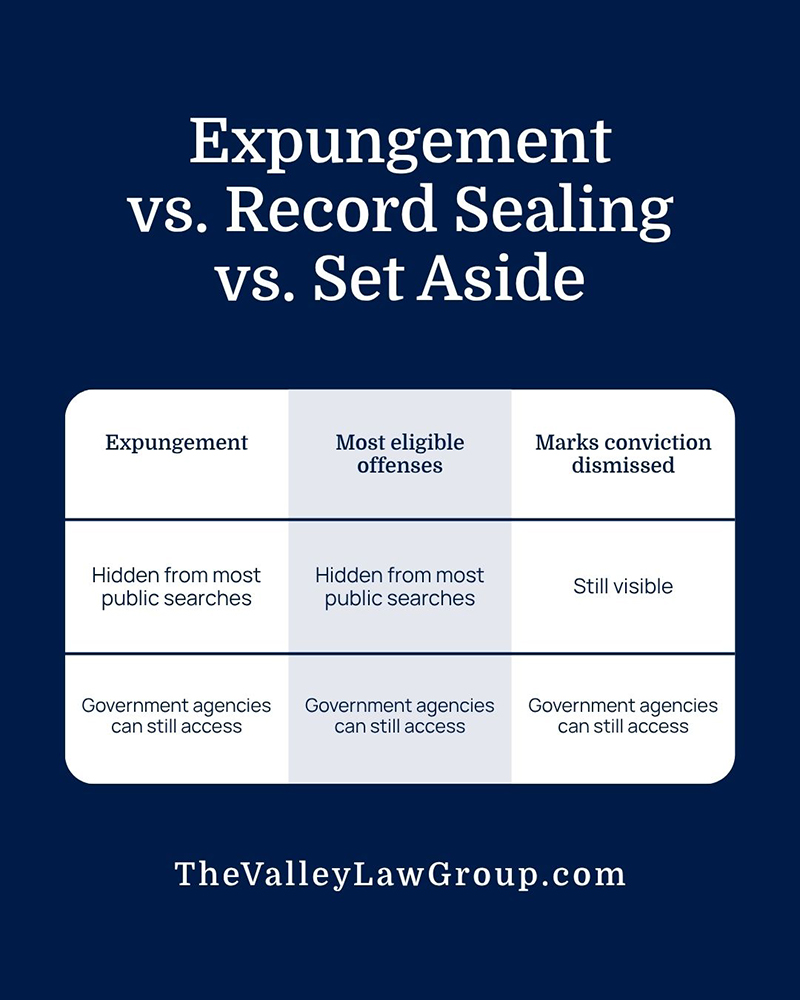
Having your record set aside or expunged provides different forms of post-conviction relief. Many people use the terms expungement and set aside interchangeably.
An expungement limits public access to criminal records of a marijuana offense. They don’t appear in many background searches, which keeps them out of view for people such as employers or landlords. This is similar to record sealing, which provides similar benefits but is used for crimes other than marijuana offenses.
A set-aside does not shield your criminal conviction from public view. Instead, the record is updated showing that the court dismissed the judgment after you had already served your sentence. Your conviction can still appear on background checks, but a set-aside can demonstrate rehabilitation and remove certain employment and housing limitations you would otherwise be subject to.
Both methods for post-conviction relief leave your criminal history visible to the government. This means your past conviction can still be used to impact future criminal charges and penalties.
Not sure which option applies to your case?
How the Expungement Process Works
Many individuals looking to clear their criminal history wonder how to expunge records in AZ. The right legal tool for you depends on the relief you are seeking, though most expungement and set-aside cases follow a similar legal process. Before filing, it is important to confirm with a lawyer that you meet all of Arizona’s eligibility requirements.
The process typically includes:
Typically, this process will take a few weeks to months, depending on court availability and whether hearings are needed.
What Happens After Your Record Is Expunged?
After your record is expunged or otherwise adjusted, you can move forward with better opportunities, fewer obstacles, and a sense of closure. Public access to your criminal record is limited, which makes it easier for you to pursue more opportunities in your career, education, and housing. With a sealed record, the offense will not be visible on most background checks, and a set-aside mark will notify viewers not to consider the charge.
Many people with an expunged record find it easier to find a job, secure good housing, pursue higher education, and attain and use professional licenses. While the exact rights you restore vary depending on whether your case was expunged, sealed, or set aside, there are more opportunities compared to a fully visible criminal record.
Common Mistakes to Avoid During the Expungement Process
Many expungement petitions face delays or denials due to avoidable mistakes, making it crucial that you work with a skilled attorney who can guide you through the process and help you craft a strong petition. According to the Arizona Judicial Branch (2026), a petition denial can leave you unable to file another petition to seal for the next 3 years.
Some of the most common mistakes include:
- Applying Before You Meet Eligibility Requirements – Some people are denied because they file a petition before completing the waiting period or while they still have outstanding fines.
- Submitting Incomplete Paperwork – Missing documents or incorrect case information can slow down or halt the expungement process.
- Confusing Expungement With Set-Aside – Many people assume both forms of relief are the same and don’t follow the proper procedures for the relief they need.
- Assuming All Offenses Qualify – Not every conviction is eligible for expungement or other forms of relief, including violent offenses.
- Waiting Too Long to Seek Legal Guidance – It is recommended to work with a lawyer early on in this process to help you gather the right records and prepare accurate filings.
When To Talk to an Attorney
If you are looking to clear a criminal record in Arizona, you should consult a skilled attorney as soon as you’re able. They can help you determine whether you qualify for relief and which form is right for you to pursue.
It is especially important to get legal advice if you are:
- Unsure whether you meet the eligibility requirements for expungement, record sealing, or a set-aside.
- Dealing with multiple charges or a complex criminal history.
- Facing prior denials of expungement or set-aside requests.
- Looking to maximize the chances that your petition is approved.
- Looking to expunge a juvenile offense.
Not sure if you qualify for expungement? We can review your case and explain your options.
Browse Divorce Guides & Resources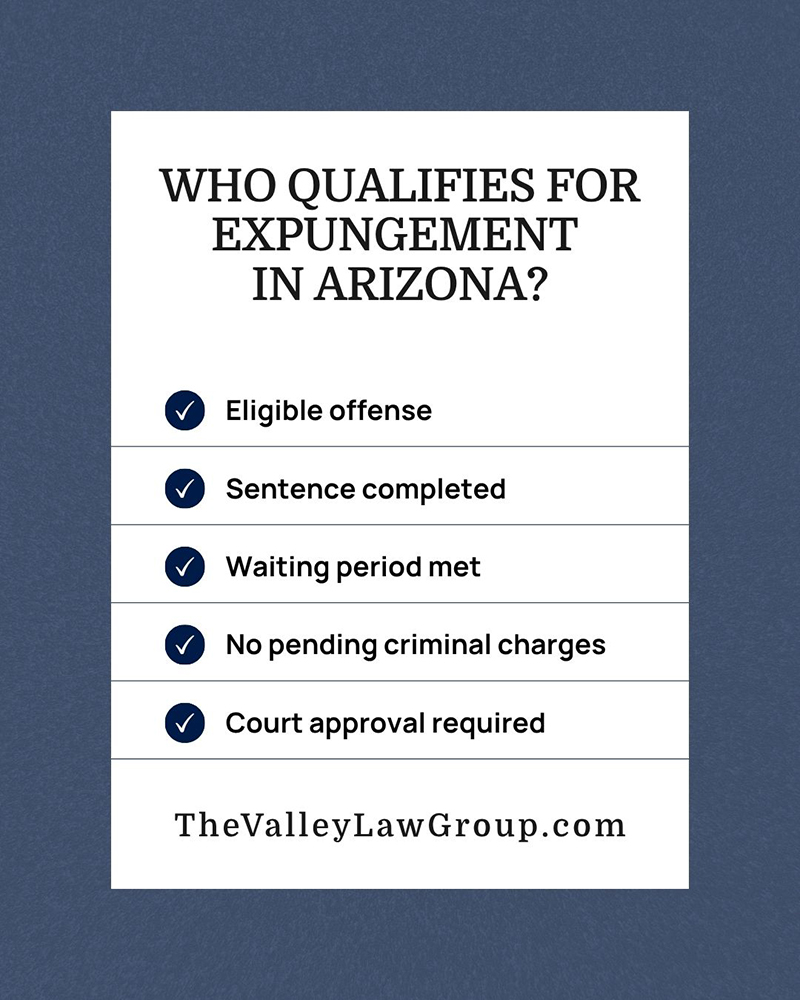
Expungement FAQs
Understanding the basics of the expungement process can help you make an informed choice about your own criminal record. The following are commonly asked questions regarding the process.
How The Valley Law Group Can Help
At The Valley Law Group, we help clients understand their options for post-conviction relief by thoroughly evaluating the specific details of their case and explaining the eligibility requirements. We understand that navigating Arizona’s record-clearing process can be overwhelming. We are here to provide straightforward answers and steadfast support to help you achieve a better future.
The dedicated lawyers at The Valley Law Group focus on improving your chances of approval.
We do this by guiding you throughout each step of the process, ensuring:
- Your petition is complete, accurate, and properly filed with the court.
- You are fairly represented during a hearing.
- All court communications are handled promptly and professionally.
Looking for official forms, eligibility information, and rights restoration guidance?
Contact The Valley Law Group Now to Start Working Towards a Clear Criminal Record
Clearing your record in Arizona starts with understanding your eligibility and choosing the right form of post-conviction relief. To find out whether you may qualify for record sealing, expungement, or a set aside, contact The Valley Law Group today.
We serve clients throughout Arizona, with offices in Phoenix, Scottsdale, Gilbert, and Peoria.

Sources:
- Arizona Judicial Branch. (n.d.). Sealing records. Retrieved July 2, 2026, from https://www.azcourts.gov/selfservicecenter/criminal-law/sealing-records
- Maricopa County Superior Court Law Library Resource Center. (n.d.). Expungement forms. Retrieved July 2, 2026, from https://superiorcourt.maricopa.gov/llrc/crsr1/
- Arizona Revised Statutes § 13-911. (n.d.). Sealing of criminal case records; requirements; procedure. Retrieved July 2, 2026, from https://www.azleg.gov/viewdocument/?docName=https://www.azleg.gov/ars/13/00911.htm
- Arizona Judicial Branch. (n.d.). Proposition 207: Marijuana expungement. Retrieved July 2, 2026, from https://www.azcourts.gov/prop207

Jon McCarty has broad experience in a wide variety of criminal defense and family law matters. After graduating from the University of Illinois College of Law with the highest honors, Jon served as Law Clerk to The Honorable David Briones in the United States District Court for the Western District of Texas. After running a successful practice of his own for many years, Jon relocated to Maricopa County where he has continued to strive for excellence through aggressive yet compassionate representation of each client. Jon has been named to the list of Super Lawyers in the area of family law multiple times, and has been recognized for his outstanding commitment to Equal Access to Justice through providing pro bono representation to numerous clients.