



In This Article, You’ll Learn
- When a juvenile can be tried as an adult in Arizona
- The differences between juvenile and adult court
- Crimes that may lead to adult prosecution
- Factors Arizona courts consider before transferring a case
- Whether a transfer can be challenged
- How a juvenile defense attorney can protect your child’s future
Whether you are a minor or an Arizona resident whose child has committed a crime in Arizona, you are likely consumed by uncertainties and questions regarding the juvenile court process. Fortunately for most individuals who are in either of these two categories, Arizona handles juvenile crime differently from adult crime. The criminal justice system typically serves punishment to adults, while the juvenile justice system focuses on rehabilitation.
However, the state reserves the right to hold some juvenile offenders accountable for severe crimes as it would an adult accused of the same crime. In some instances, minors are tried as adults and receive adult consequences. Learn more about when a minor can be tried as an adult in Arizona – and how a skilled defense lawyer can help – from The Valley Law Group.
How Juvenile Court Is Different from Criminal Court
Juvenile Court vs. Adult Court
| Juvenile Court | Adult Criminal Court |
| Rehabilitation | Punishment |
| Sealed records possible | Permanent criminal record |
| Treatment programs | Adult sentencing |
| Juvenile detention | Prison |
Before you determine whether your or your loved one’s criminal actions may land you in an Arizona criminal court, it’s important to understand why the distinction is so consequential.
Most juvenile offenses are handled in juvenile court, as the justice system strives to promote rehabilitation rather than impose penalties. With access to educational resources, a variety of treatment programs, and counseling, minors have several opportunities to return to society as responsible adults.
How Juvenile Cases Are Handled in the Juvenile Justice System
Minors who commit juvenile crimes in Arizona face consequences that hold them accountable for their actions while also serving as a form of rehabilitation.
In most juvenile cases, these consequences are less severe than the penalties given to adults:
- Probation – Probation allows the juvenile to remain at home rather than being detained. Usually, the juvenile is only permitted to do this with certain stipulations, such as completing check-ins with a probation officer, keeping to a curfew, and attending school.
- Counseling or Treatment Programs – Juveniles may undergo counseling or complete programs with a focus on treating substance use or mental health issues. This may be instead of or in addition to other consequences.
- Community Service – Most juveniles are required to complete a specified number of hours of community service.
- Fines or Restitution – The minor may be ordered to pay fines to the county and/or restitution to victims impacted by the offense.
- Detention – Severe or repeated offenses may result in court-ordered detention in a juvenile facility. Typically, this option is used as a last resort, as the purpose of Arizona’s juvenile justice system is rehabilitation.
Even if a minor is tried in juvenile court, it’s important to understand that minor offenses can still impact their future. Arizona juvenile crime resources are available to help parents and minors alike navigate this often overwhelming process.
When Can a Minor Be Tried as An Adult in Arizona?
While most cases involving minors are tried in juvenile court, minors can be tried as adults here in Arizona. The decision to try a minor as an adult in Arizona is based on multiple factors, including the minor’s age, the severity of the crime, any history of delinquency, and the likelihood of rehabilitation in the juvenile justice system.
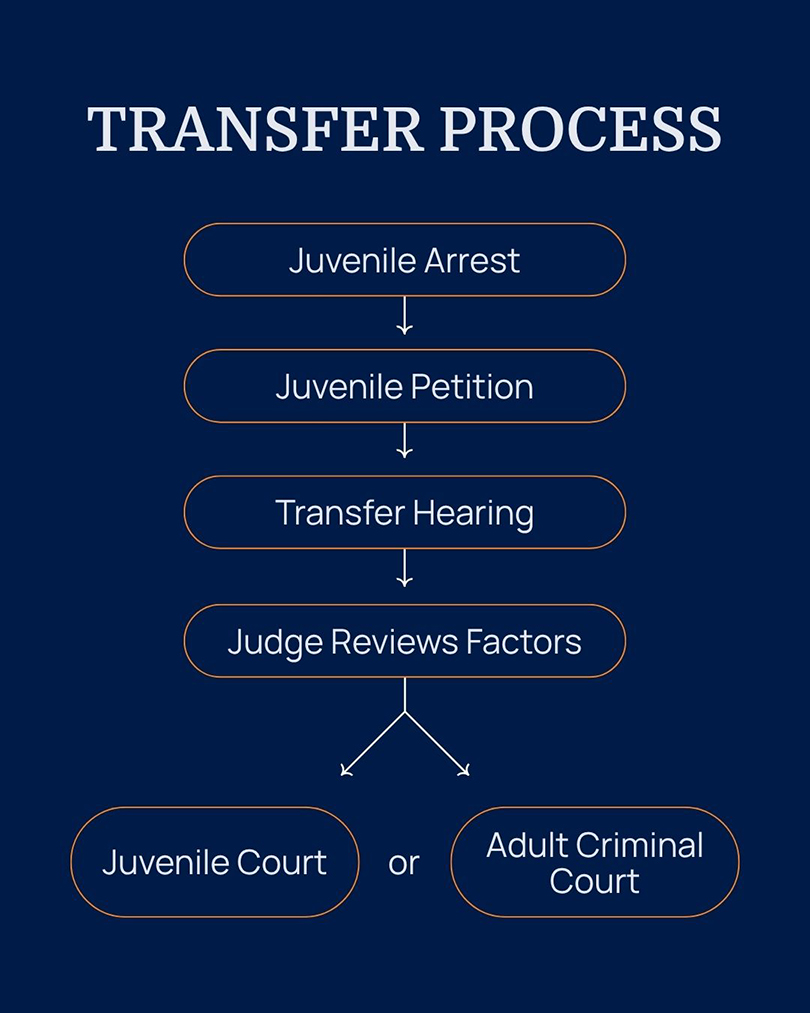
If the juvenile has committed a serious crime or their history indicates they could be charged as an adult, prosecutors can file charges directly in criminal court without consulting a juvenile court judge. More often, charges are filed in juvenile court, which must then be transferred to criminal court.
If charges are filed in juvenile court first, a prosecutor must petition to transfer charges. A judge then reviews the petition, considering the minor’s age, the details of the case, and whether the minor has prior convictions. If the judge decides to charge the minor as an adult, the case is transferred to a criminal court.
In both circumstances, the minor must go through the same legal procedures and face the same serious penalties as they would if they were an adult.
What Types of Juvenile Crimes May Lead to Adult Charges?
Some of the most common juvenile offenses in Arizona include vandalism, theft, possession of illegal drugs, vehicle theft, robbery, cybercrimes, and simple assault. For first-time offenders, these cases will proceed through the juvenile court system. However, more serious juvenile crimes in Arizona can result in criminal charges in adult court.
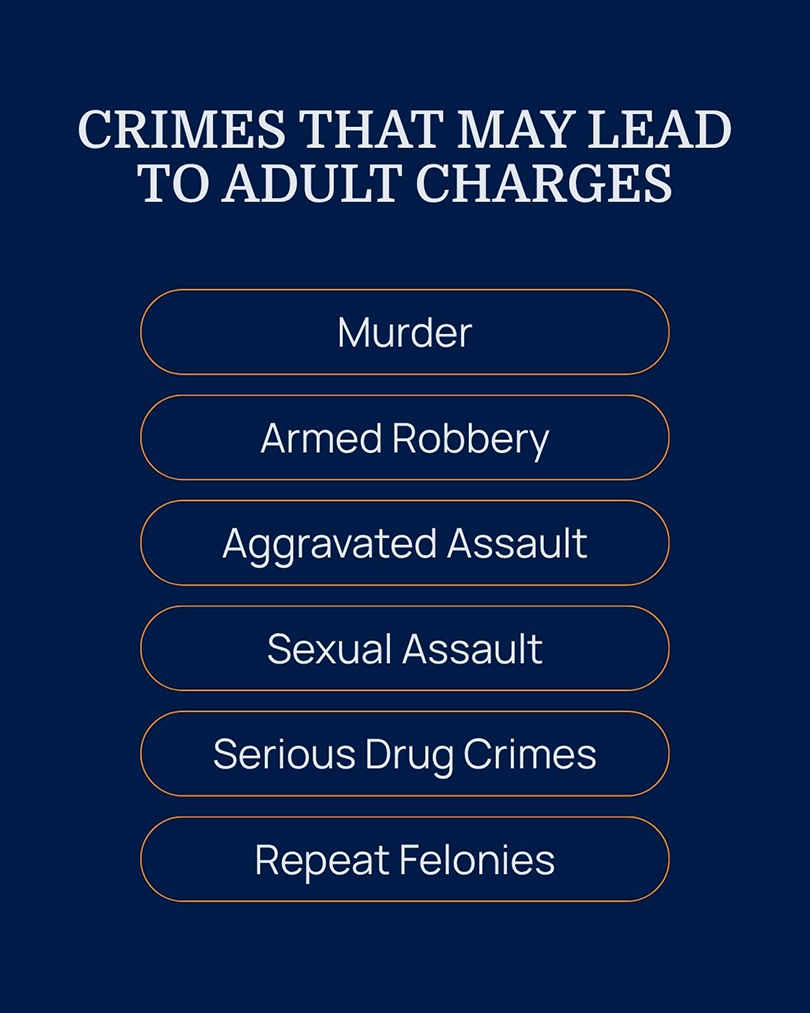
These offenses include:
- First-Degree Murder – When a minor deliberately and purposely plans the murder of another, they are charged with murder in the first degree. This class one felony can be tried in criminal court and can result in up to life in prison.
- Second-Degree Murder – The intentional murder of another person without deliberate planning can also be tried in criminal court. A minor charged with second-degree murder is accused of deliberate actions that resulted in death. This class one felony can result in serious penalties depending on the details of the offense (ARS 13-1104).
- Aggravated Assault – Aggravated assault refers to a minor’s intentionally reckless actions that cause serious injury to another person. Offenses can include purposefully invoking fear of bodily harm or intentionally making contact with an individual to cause harm, to insult them, or to provoke anger.
- Aggravated Assault with a Deadly Weapon – This offense involves using a deadly weapon while intentionally causing harm to another. A deadly weapon is any item used in a lethal action, including firearms, swords, or knives.
- Armed Robbery – In Arizona, armed robbery is a violent crime, so when a minor is charged with armed robbery, the case is typically tried in criminal court. An armed robbery conviction is a class two felony that can leave minors facing seven to 10 years in prison (ARS 13-1904; ARS 13-704).
- Forcible Sexual Assault – Also known as rape, this offense involves a minor forcing sexual intercourse or oral sexual acts on another individual without their consent. Other types of sexual assault may also be tried in criminal court.
- Serious Drug Offenses – Possessing or selling dangerous drugs, such as narcotics or methamphetamines, often results in felony charges that are tried in adult criminal court.
- Other Violent Offenses – Any kind of violent offense committed by a juvenile that is classified as a felony may lead to adult charges, especially if the incident caused severe harm to a victim. How these offenses are handled is left to the county attorney’s discretion.
- Repeated Offenses – If a minor commits several felonies, either consecutively or at once, they are more likely to be tried as an adult.
What Factors Do Arizona Courts Consider?
The prosecution and the court consider several factors when determining whether a juvenile is charged as an adult in Arizona:
- The Age of the Juvenile – Under ARS 13-501, a minor aged 14 to 17 who has committed a serious crime may be tried as an adult.
- The Severity of the Alleged Offense – In accordance with ARS 13-504, severe crimes, such as those listed above, may be tried in criminal court.
- Prior Juvenile Record – A prior juvenile record, including periods of court-ordered probation or contact with the court (ARS 13-504), can influence the court’s decision to try a case in criminal court.
- Violent or Weapons Crimes – Violent crimes, especially those involving a weapon, impact the severity of the crime and can affect the court’s decision to try the juvenile as an adult.
- The Minor’s Maturity and Rehabilitation Options – The court also considers whether the minor is amenable to rehabilitation through the juvenile court and whether the minor demonstrates emotional and mental maturity (ARS 13-504).
- Public Safety Concerns – Juveniles who are a threat to public safety are more likely to be tried in criminal court.
- Strength of Associated Evidence – Substantial evidence may contribute to the court’s decision.
- Relative Propriety of Juvenile Court Procedures – Cases involving violence may require the stricter proceedings of the criminal justice system.
Attorney Insight from Jon McCarty, Managing Criminal Defense Attorney
A transfer to adult court is one of the most significant decisions in a juvenile case. Early intervention can make a meaningful difference by demonstrating rehabilitation, maturity, family support, and other factors that may persuade the court to keep the case in the juvenile justice system.
What Happens If a Juvenile Is Tried as an Adult?
As mentioned, cases can proceed directly to criminal court or be transferred from the Arizona juvenile court to an adult criminal court. In either situation, ARS 15-501 dictates that there are higher stakes for minors tried in criminal court versus juvenile court.
Court Proceedings
In general, the minor will experience criminal court procedures because they are treated not as a minor but as an adult. Minors tried as adults will be formally arraigned. Similarly, while juvenile cases involve hearings rather than trials, a case transferred to criminal court may be subject to a jury trial.
Potential Penalties
The court also follows adult sentencing guidelines, meaning the juvenile may face the same penalties as an adult. These penalties can include serving time in prison, mandatory minimum sentencing, paying fines or restitution, probation, and a permanent criminal record. While juvenile records can be sealed, expungement of an adult criminal record is not always possible.
Long-Term Impacts
Being tried as an adult has many long-term effects, such as hindering the minor’s chances of college acceptance or financial aid eligibility. A permanent criminal record can also negatively impact a minor’s career or employment options, housing opportunities, and trigger restrictions regarding firearm rights. An attorney can fight for juvenile record expungement in Arizona to help reduce these impacts.
Can a Transfer to Adult Court Be Challenged?
A knowledgeable defense lawyer can effectively challenge the transfer of a juvenile’s case to an adult court. Keeping matters in juvenile court when possible is a key focus for any reputable lawyer.
How an Attorney Can Dispute the Petition to Transfer
When the prosecution files a motion to transfer the case, the juvenile court holds a transfer hearing. It is during this hearing that the defense attorney can fight against the petition to transfer, presenting mitigating evidence and questioning the strength of the case. A judge then assesses whether it would benefit the minor’s rehabilitation and public safety for the case to remain in juvenile court.
Requesting a Reverse Waiver
Under Arizona law ARS 13-504, a defense attorney may also request a reverse waiver so that a case being transferred to adult court can be returned to the juvenile justice system.
Discussion of such a waiver occurs at a hearing in a criminal court, where the defense attorney presents evidence explaining the positive impact of the juvenile undergoing rehabilitation in juvenile court. The attorney also explains why it would benefit the minor, rather than subjecting the minor to harsh penalties in criminal court.
How a Juvenile Defense Attorney Can Help
Hiring a juvenile crimes attorney in Arizona can make a significant difference in your child’s case. They can help you navigate legal procedures that are complicated by the differences between the juvenile justice system and the criminal court. A juvenile defense lawyer with a thorough understanding of laws and procedures can make the legal process smoother by explaining your rights and legal options.
Protecting the Juvenile’s Rights
Minors need to realize that they have the same rights as adults. This means they have the right to remain silent and the right to legal representation. A defense attorney may not only represent a minor in court but also protect their rights throughout the legal process.
Building a Strong Defense
Taking action as soon as possible is the most effective way to defend a juvenile accused of a crime. Because of the serious nature of juvenile criminal charges, it is wise to have a defense lawyer evaluate the case as soon as possible. A lawyer can gather valuable evidence and develop a strong defense strategy tailored to your case.
Acting on Behalf of the Juvenile
A lawyer can take many steps to protect your child’s reputation, including working with the child’s school to relay important information to the appropriate personnel. As criminal charges tend to attract public and media attention, a lawyer can proactively prevent inappropriate media statements. They may also communicate with prosecutors on the minor’s behalf as they prepare for upcoming hearings.
When possible, a lawyer may also request reduced charges or ask for an alternative sentence to protect the child’s future. If a conviction is entered in criminal court, your attorney can advise you on whether you may qualify for post-conviction relief, such as a set aside, record sealing, or other remedies available under Arizona law. Overall, it is the attorney’s goal to work toward the least damaging outcome for your child’s case.
Talk to an Arizona Juvenile Crimes Attorney
When your child is facing a frightening or overwhelming legal situation, it is not uncommon to feel helpless. Facing serious juvenile crimes and being tried as an adult with the potential for lifelong consequences is emotionally taxing for everyone involved. Do not attempt to handle the complicated legal system on your own. Contact The Valley Law Group for a consultation and begin protecting your child’s rights and reputation while giving them the chance of a bright future.
We are proud to serve Valley-area residents with four offices in Phoenix, Gilbert, Peoria, and Scottsdale. With our local presence, we make valuable connections within the area’s legal community. Make the best decision for your child’s future – call your local office today.
Sources:
- Arizona Revised Statutes § 13-501. (n.d.). Juvenile offenders; filing; transfer; retained jurisdiction. Retrieved July 2, 2026, from https://www.azleg.gov/ars/13/00501.htm
- Arizona Revised Statutes § 13-504. (n.d.). Transfer hearing; factors. Retrieved July 2, 2026, from https://www.azleg.gov/ars/13/00504.htm
- Arizona Revised Statutes § 13-1104. (n.d.). Second-degree murder. Retrieved July 2, 2026, from https://www.azleg.gov/ars/13/01104.htm
- Arizona Revised Statutes § 13-704. (n.d.). Dangerous offenders; sentencing. Retrieved July 2, 2026, from https://www.azleg.gov/ars/13/00704.htm
- Arizona Revised Statutes § 13-1904. (n.d.). Armed robbery; classification. Retrieved July 2, 2026, from https://www.azleg.gov/ars/13/01904.htm

Jon McCarty has broad experience in a wide variety of criminal defense and family law matters. After graduating from the University of Illinois College of Law with the highest honors, Jon served as Law Clerk to The Honorable David Briones in the United States District Court for the Western District of Texas. After running a successful practice of his own for many years, Jon relocated to Maricopa County where he has continued to strive for excellence through aggressive yet compassionate representation of each client. Jon has been named to the list of Super Lawyers in the area of family law multiple times, and has been recognized for his outstanding commitment to Equal Access to Justice through providing pro bono representation to numerous clients.